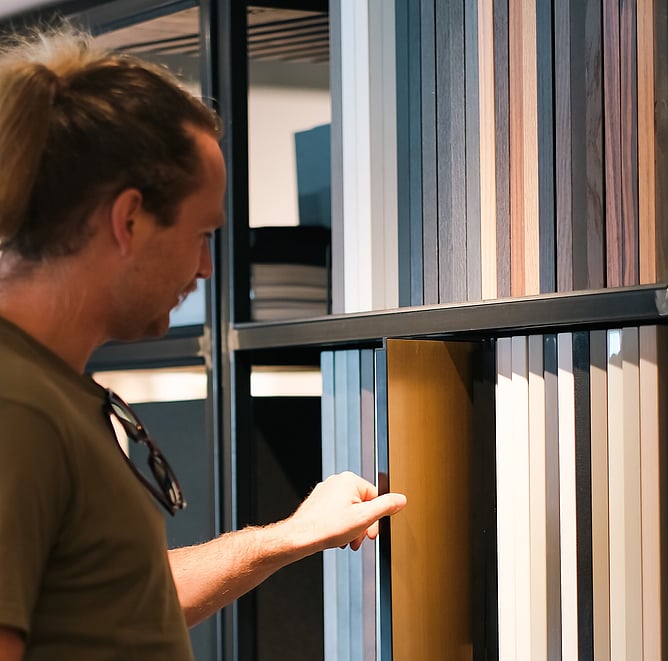
Why ultra high-end homes need more than off-the-shelf materials
When you’re building or renovating an ultra high-end home, materials do far more than fill a space. They shape how your home looks, feels, functions, and lasts.
At this level, standard selections often fall short. They may be convenient, but convenience is not the same as considered design. If you want a home that feels personal, refined, and genuinely different, bespoke material selection and sourcing becomes a key part of the process.
That’s often where homeowners feel stuck. You might know you want something unique, but not know where to begin. What products are even possible? Where do you find them? How do you know whether a finish will work in real life, not just in a photo? And how do you pull it all together so the result feels cohesive rather than pieced together?
This is where the right builder brings real value. At JKL Architectural builders, the process starts by understanding your vision properly, then building a tailored material brief around how you want your home to look, feel, and function. From there, we help guide the research, sourcing, samples, and visual decision-making that turn ideas into something clear and buildable.
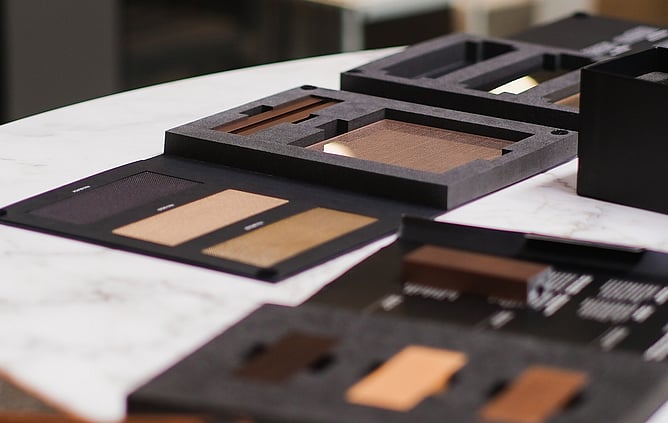
Why off-the-shelf materials often fall short in ultra high-end homes
Off-the-shelf products have their place. In many homes, they can be practical, efficient, and perfectly suitable. But when the goal is an ultra high-end home with a strong architectural vision, they often don’t go far enough.
That’s because high-end homes are rarely about choosing what is easiest. They’re about creating a space that feels specific to the people living there.
The proportions, details, finishes, textures, and atmosphere all need to work together. Standard ranges can be limiting when you’re trying to achieve that level of individuality and cohesion.
It’s not only about appearance either.
Off-the-shelf selections may not offer the finish, durability, scale, or customisation needed for a more refined result. They can make it harder to create spaces that feel resolved and intentional, especially when every other part of the home has been carefully designed.
In an ultra high-end home, the materials need to do justice to the architecture. They need to support the design rather than water it down.
What bespoke material selection actually means
Bespoke material selection does not always mean creating every product from scratch. It means choosing materials, finishes, fixtures, and fittings in a way that is tailored to the home, the site, and the client.
That could include custom products. It could also mean sourcing from specialist suppliers, combining finishes in a more thoughtful way, selecting materials from international brands, or narrowing down options based on how they work together in the overall design.
The goal is not simply to find something expensive or exclusive. The goal is to find what is right.
That means considering things like colour, tone, texture, scale, durability, maintenance, functionality, light, surrounding materials, and how the home will be used day to day. In a well-designed home, material choices are not random - they’re connected.
When this process is done properly, the result feels effortless. Not because it was simple, but because every decision was made with care.
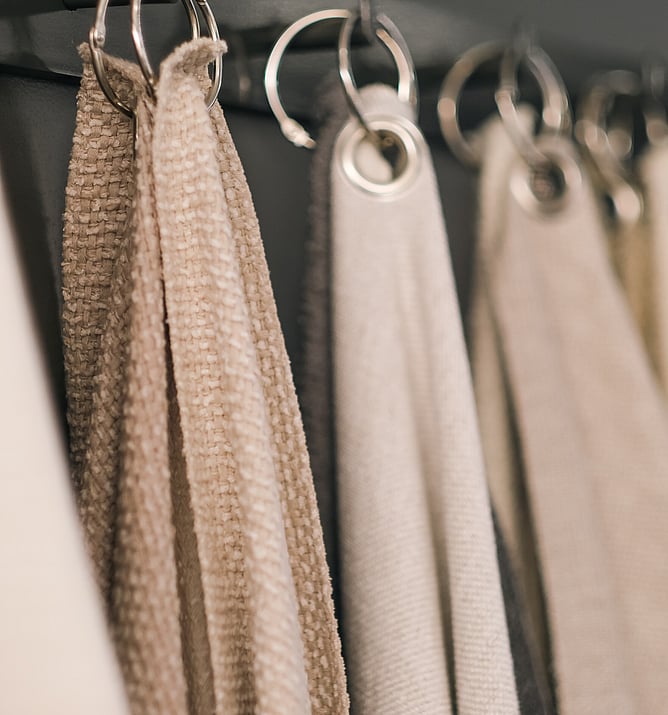
It starts with understanding how you want your home to feel
Before anyone starts looking at products, samples, or supplier catalogues, the most important step is understanding what you want.
That sounds obvious, but it is where many projects succeed or fail.
A beautiful home is not made by chasing individual products. It is made by creating a clear brief around the bigger vision. That includes your design preferences, how you live, what matters to you practically, and how you want the space to feel when it is finished.
Some of our clients want calm, quiet warmth with natural tones and soft texture. Others want something bolder and more sculptural. Some are focused on durability for family life. Others are creating a home for entertaining, retreat, or showcasing art and design. Often it is a combination of all of these.
The point is that bespoke material selection should never start with what is available. It should start with you.
Once that brief is clear, the possibilities become much easier to filter and shape.
How JKL creates a bespoke material brief
At JKL Architectural Builders, our process is about turning your ideas, preferences, and goals into something tangible.
We start by listening carefully. That means understanding what you’re drawn to, what you want to avoid, how you want the home to function, and the level of finish you’re aiming for. We also look at the architecture, the site, the light, and how different spaces need to perform.
From there, we begin building a material direction that reflects your vision.
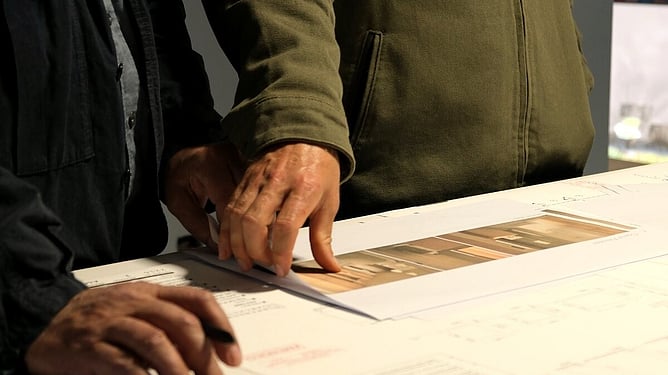
We gather the details behind your design preferences
This stage is about more than asking what colour you like.
We want to understand the overall feeling you are trying to create, the materials you naturally respond to, the textures you love, the finishes that fit your lifestyle, and the level of uniqueness you want in the final result.
This creates the foundation for a much stronger brief. It also means decisions are guided by something clear, rather than being made in isolation later on.
We create live moodboards with colours, samples, and textures
A strong material brief needs to be visual.
That is why we create live moodboards that bring together colours, finishes, textures, and product ideas in one place. This helps you see how different selections relate to one another, rather than trying to imagine them separately.
It is often at this point that the vision starts to sharpen. You can begin to see what feels right, what needs adjusting, and where there may be room to push the design further.
We can order real samples so you can see and feel them properly
Photos are useful, but sometimes they’re not enough for high-end decision-making.
Some materials need to be seen in real light and, where possible, touched in person. Tone, texture, sheen, grain, and scale can all change when you move from a screen to real life.
That is why samples can matter so much. They help confirm whether a finish feels as good as it looks and whether it sits well with the surrounding selections.
We refine the brief before final decisions are made
One of the biggest advantages of a bespoke process is that it gives you room to refine.
Instead of rushing into selections, we can adjust the brief as the materials start to come together. Sometimes that means simplifying. Sometimes it means elevating. Sometimes it means discovering a better option than the one you originally had in mind.
This part of the process creates clarity. It helps make sure the final choices are not only beautiful, but right for the home as a whole.
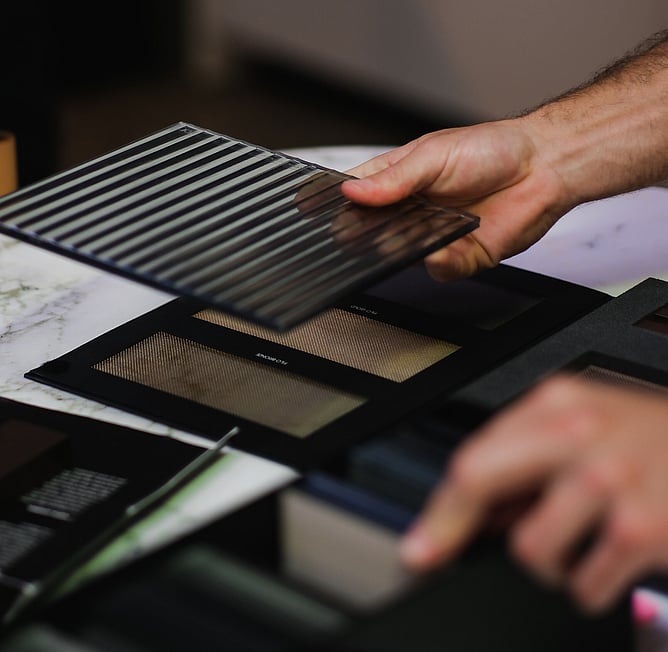
Why samples, showrooms, and renders matter
In ultra high-end homes, details matter too much to rely on guesswork. Samples, showroom visits, and renders all help turn abstract ideas into something much clearer and more confident.
Samples let you compare finishes side by side. They help you assess texture, colour, weight, and quality in a way that a website image cannot.
Showrooms give you access to a broader range of possibilities and allow you to experience products properly. Through JKL’s supplier network, clients can explore premium options in person and compare different material directions with more confidence. That might include kitchen suppliers, surface specialists, lighting brands, and other high-end product partners.
Renders then take those material choices and show how they work together in the actual space. This is often where clients gain a new level of clarity. Seeing the colours, textures, and finishes in context can confirm a direction or reveal where something needs to shift.
That clarity is valuable. It reduces uncertainty, supports better decisions, and helps everyone move forward with confidence.
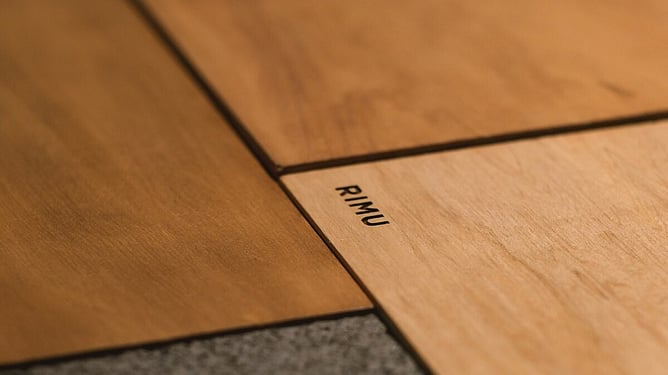
Sourcing locally and beyond New Zealand opens up more materials possibilities
One of the limitations of a standard product-led approach is that it often relies on what happens to be easily available locally.
For some projects, that may be enough. For an ultra high-end home, it often is not.
A bespoke home deserves a wider lens. The right kitchen, surface, lighting feature, fitting, or finish may come from a specialist supplier in New Zealand, or it may need to be sourced from overseas. Keeping that option open expands what is possible and gives the design far more room to become something distinctive.
JKL works with a network of suppliers and showrooms and can source products from both local and international markets. That means the process is not limited to what sits on a shelf in a standard range. It allows for a more tailored result and access to products that better suit the vision for the home.
Depending on the project, this may include brands and platforms such as Boffi, Matisse, ECC Lighting, and ArchiPro, along with other specialist suppliers that align with the brief.
For our clients, this is often a huge relief. You don’t have to know where to look or how to compare hundreds of high-end options on your own.
You have an Architectural builder who can help guide that process and connect the dots.
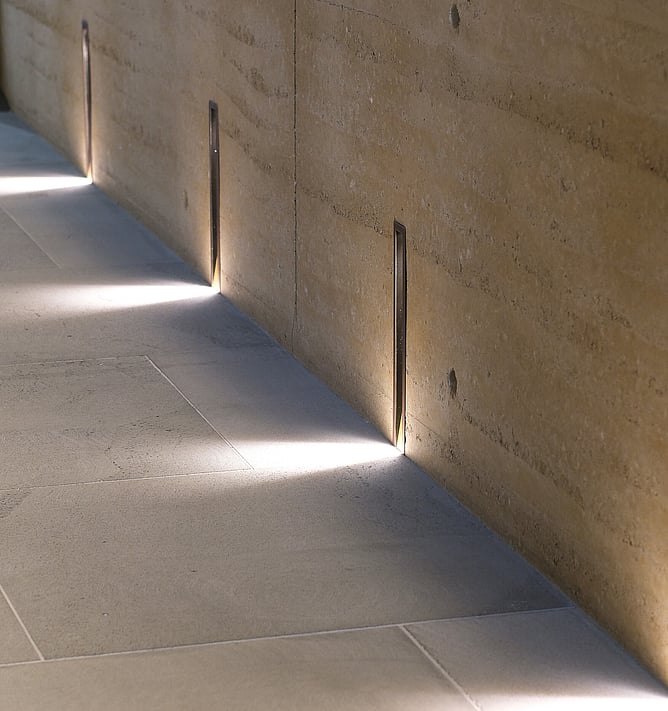
Bespoke selection isn’t just about appearance
Luxury should look good, but it also needs to live well.
That is why bespoke material selection is never just about visual impact. It’s also about performance. A material might photograph beautifully, but if it doesn’t suit the way the space will be used, it may not be the right choice.
That is where practical thinking matters.
Durability, maintenance, environmental conditions, functionality, and longevity all need to be considered alongside aesthetics.
A finish that works well in a formal powder room may not be the best fit for a busy family kitchen. A stunning surface may need to be balanced against how it will wear over time. Exterior materials need to respond to site conditions, sun exposure, weather, and long-term upkeep.
When the right questions are asked early, the result isn’t just a more beautiful home. It’s a home that continues to work beautifully over time.
That’s part of what makes a bespoke process worth it. It gives you the opportunity to choose with both emotion and practicality in mind.
The best results come from tailoring every decision to the client
No two high-end homes should feel the same, because no two clients live the same way.
That is why the real value of bespoke material selection is not simply access to more products. It is the ability to tailor every decision to the people who will live there.
For one client, that might mean warm natural materials, subtle texture, and understated luxury. For another, it might mean bold contrasts, sculptural fittings, and statement finishes. For someone else, it may be about balancing elegance with durability so the home feels beautiful without becoming precious.
There is no single formula for a successful result.
The quality comes from understanding the brief properly, pushing the vision where needed, and selecting materials that support the architecture, the lifestyle, and the feeling the client wants to create.
That is what makes a home feel deeply personal rather than simply well decorated.
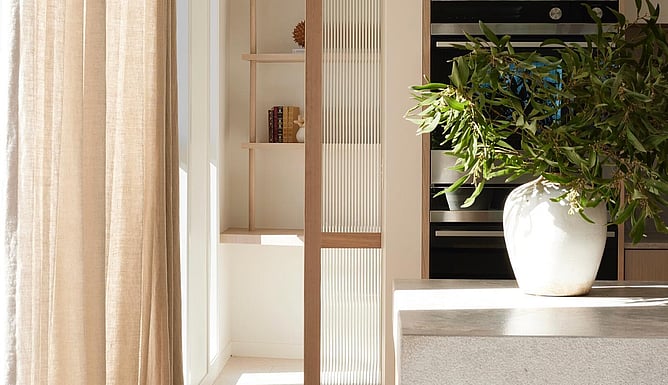
The result is a home that feels considered, cohesive, and unmistakably yours
The difference between a standard finish schedule and a bespoke material process is often felt more than explained.
You walk into the space and everything makes sense. The kitchen belongs with the lighting. The stone works with the timber. The fittings feel right in the hand. The palette flows. The details support the architecture. Nothing feels accidental.
That’s what people are really looking for when they want a home that is unique.
They aren’t just asking for premium products. They’re asking for a home that reflects them, functions beautifully, and feels complete at every level.
That takes more than off-the-shelf materials.
It takes a clear brief, a thoughtful process, strong supplier relationships, careful sourcing, and a builder who understands how to bring all those moving parts together.
Start shaping your vision
If you’re planning a new build or high-end renovation and want a home that feels personal, refined, and genuinely your own, the material selection process deserves careful thought from the beginning.
Book a free site visit to talk through your project, or complete our moodboard questionnaire to start shaping a material direction that matches your vision.
Questions about ultra high-end materials
What is bespoke material selection in a home build?
Bespoke material selection is the process of choosing materials, finishes, fixtures, and fittings based on the specific design brief, lifestyle, and architectural vision for your home. It’s about selecting what is right for the project rather than choosing from a standard range.
Why are off-the-shelf materials not always right for luxury homes?
Off-the-shelf materials can be limiting when a home needs a more tailored, high-end result. They may not offer the level of individuality, finish, cohesion, or performance needed for a truly bespoke architectural home.
Can JKL Architectural Builders source materials from overseas?
Yes. We can source products from both New Zealand and international suppliers, depending on what best suits the brief and the design direction of the project.
Why are samples and moodboards important?
Samples and moodboards help you compare colours, textures, finishes, and products in a more realistic way. They make it easier to see how selections work together and help you make decisions with more confidence.
Do bespoke materials always mean custom-made products?
No. Bespoke does not always mean fully custom-made. It can also mean carefully selecting and sourcing premium materials and finishes from specialist suppliers in a way that is tailored to your home and your vision.
When should material selection start in a building project?
Material selection should start early, once the overall vision and brief are being shaped. Early planning helps create a more cohesive result and reduces rushed decisions later in the process.