How to reduce waste when renovating your home
Renovating an existing home inevitably creates some waste. Materials are removed, new products arrive on site and timber, plasterboard and other building materials need to be cut to fit. But how much of that becomes waste isn't entirely inevitable.
Good planning, careful material management and choosing the right waste systems can make a significant difference. For us, reducing renovation waste starts well before something is put into a skip. It comes back to the same principle we apply across a build: use materials thoughtfully, make good decisions early and avoid unnecessary waste wherever we can.
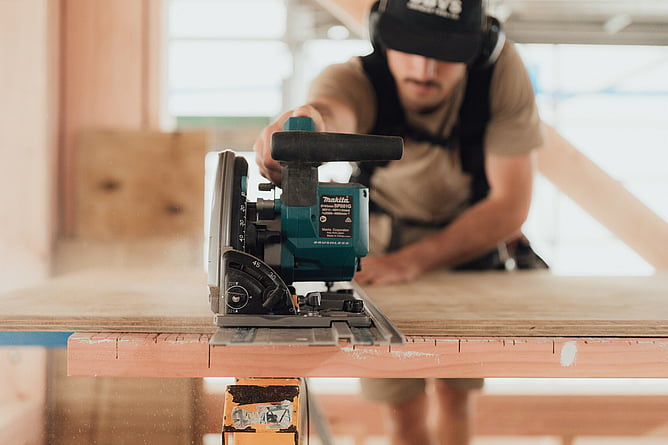
What is construction waste management?
Construction waste management is the process of reducing, separating, reusing, recycling and responsibly disposing of the materials generated during building and renovation work.
The important part is that waste management doesn't begin when materials are thrown away. Some of the biggest opportunities come earlier, through ordering carefully, storing materials properly and thinking about how each piece can be used before it is cut.
That's where good building practice and sustainable building often overlap.
Reducing waste starts with how materials are used
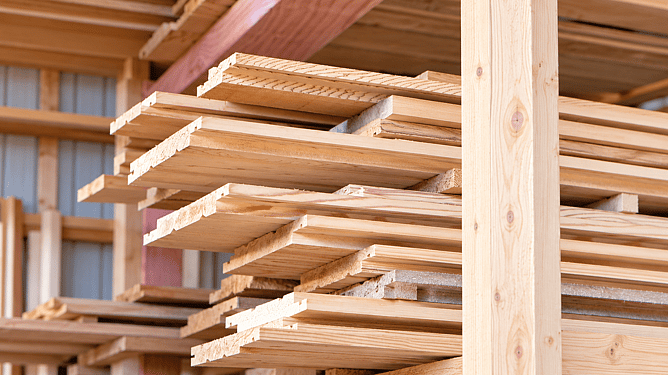
Take timber as an example. On a renovation, we'll have different lengths and sizes of timber available on site. Without a system, it's easy to grab the nearest piece, cut off what you need and discover later that the remaining piece isn't long enough for another job. Multiply that across an entire renovation and a lot of perfectly usable material can end up as offcuts.
At JKL, we use a timber stacking system that makes it easier to see what is available and select the most appropriate length for the job. It sounds simple, because it is.
But those small decisions made repeatedly throughout a project help us get more from the materials already on site and reduce the volume of usable timber being discarded. It also means our clients get better value from the materials purchased for their home.
Careful planning can prevent waste before it happens
Waste reduction isn't one individual decision. It's the result of hundreds of decisions made throughout a renovation.
That includes:
accurately estimating and ordering materials.
storing materials carefully so they aren't damaged.
selecting the right size or length before cutting.
retaining usable offcuts for other parts of the build.
separating materials where they can be recovered or recycled.
considering waste when products and materials are selected.
For a bespoke renovation, this level of consideration is already part of working carefully.
We don't want to use more material than a detail requires. We want to understand how it will be installed, how different elements fit together and how we can get the best possible use from what has been ordered.
Where does renovation waste go?
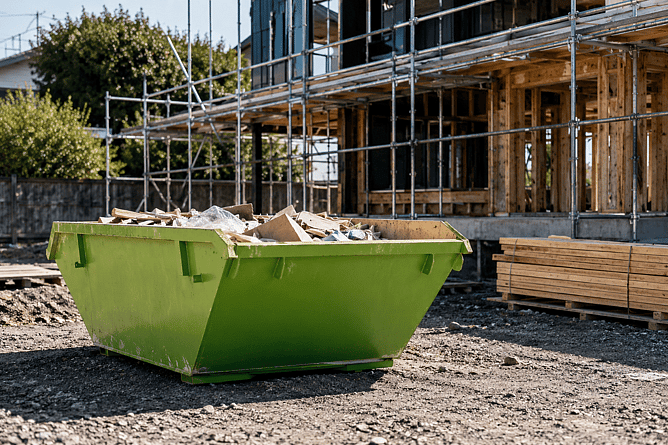
Reducing what we throw away is only one part of responsible waste management. We also need to consider what happens to the material we can no longer use. JKL uses Green Gorilla for waste management and recycling.
Green Gorilla operates resource recovery facilities that process commercial, industrial, construction and demolition waste. Rather than sending everything directly to landfill, materials are sorted so that recoverable waste can be recycled or repurposed.
For example, recovered timber can be processed into products such as biofuel, landscaping chips or animal bedding, while gypsum from plasterboard can be recovered for horticultural and agricultural uses.
Green Gorilla reports that its Auckland construction and demolition facility achieves more than 70% diversion from landfill.
For us, using a waste provider with systems for recovering building materials is an important part of managing the waste we can't prevent on site.
Material choices matter too
If sustainability is important to you, waste management can also be considered when you're choosing the materials that go into your renovation. Increasingly, we find our clients are interested in understanding what products contain, where they have come from and what impact those choices may have on their home and the wider environment.
That might mean looking at locally sourced materials, products containing recycled material or lower-chemical alternatives where they are suitable for the project.We've covered these choices in more detail in our guide to eco-friendly building materials for your home.
For a high-end architectural renovation, sustainability doesn't have to mean compromising the design or finish. It's about considering the options available and selecting materials that meet the design, performance and environmental priorities of the project.
Can a home renovation ever be waste-free?
Probably not.
Renovating an existing home involves working with an existing structure, and there will usually be materials that need to be removed or can't reasonably be reused.For us, the more useful question is: how much unnecessary waste can we prevent?
That's something we can influence.
We can plan carefully. We can use materials efficiently. We can avoid throwing away something that could still be used. And when waste is unavoidable, we can work with providers that have systems in place to recover and recycle as much of it as possible.
A more sustainable renovation is rarely the result of one big decision. It's usually the result of many considered ones.
Building with less waste takes thought
The details matter on an architectural renovation, including the ones you may never see in the finished home. How materials are ordered, stored and used, what happens to the offcuts and where waste goes once it leaves the site.
At JKL, we're conscious of the environmental impact of the work we do and look for practical ways to reduce unnecessary waste throughout the building process. Because building something exceptional shouldn't mean being careless with what gets left behind.
If you're planning a bespoke renovation or architectural build in the Bay of Plenty and want to talk about how your project could be managed, get in touch with JKL Architectural Builders.

Frequently asked questions
Can building materials from a renovation be recycled?
Yes, depending on the material and the waste facilities available. Timber, plasterboard, metals, cardboard and some other construction materials can potentially be recovered or recycled rather than sent directly to landfill.
Should I talk to my builder about waste management before renovation work starts?
Yes. Asking how materials will be managed, whether waste is separated or recovered, and what systems the builder uses on site can help you understand how waste will be approached throughout your renovation.
Can materials removed from an existing house be reused?
Sometimes. Whether a material can be reused depends on its condition, how it was originally installed and whether it is suitable for its intended new use. This is best assessed as part of the renovation planning process.
Does building sustainably mean using only eco-friendly materials?
No. Sustainability can include material selection, but it can also involve designing for longevity, using resources efficiently, minimising waste and choosing quality materials that won't need premature replacement.
Talk with us and start the conversation about your New Zealand build.